
Ancient Roots of Mother’s Day: Earth, Fertility & the Sacred Feminine
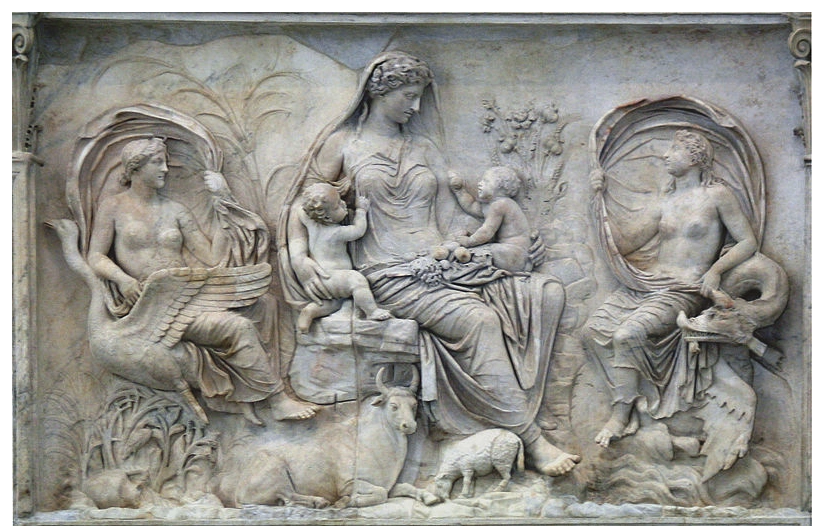
Goddess Tellus relief, Ara Pacis, circa 13- 9 BCE, via Wikimedia Commons
There is a lineage beneath our feet that predates language, memory, and even the stories we tell about where we come from. It lives in soil and bone, in seed and blood. Long before modern Mother’s Day, ancient cultures understood the earth and motherhood as one continuous, sacred cycle of creation, destruction, and renewal—raw, elemental, and inseparable from life itself. Prior to the soft pastels and greeting cards of Mother's Day, there were altars built to something far more elemental—the force that births, holds, destroys, and renews.
The ancients didn’t separate motherhood from the earth itself. To them, human bodies, fertile land, the seasons, birth, decay, and renewal were all part of the same living cycle.
To them, the ground was not inert. It was a womb.
—
Long before modern Mother’s Day, motherhood and the earth were deeply intertwined. Ancient cultures didn’t separate the body from nature. Fertility, seasons, birth, death, harvest—it was all part of a continuous rhythm.
The earth was seen as mother not just because she nurtured, but because she created, fed, destroyed, and renewed.
There was nothing polished about it. They honored that everything about her was raw, sacred and necessary.
Somewhere along the way, we softened the idea of motherhood into something more miniscule, something much easier to market and digest.
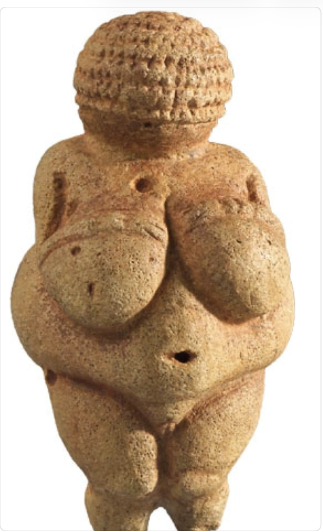
Venus of Willendorf circa 24,000-22,000 BCE, via the Natural History Museum, Vienna.
—
The version of Mother's Day we know now actually began from a sincere place. It was created in the early 1900s by Anna Jarvis to honor her mother and the often invisible labor of care.
Ironically, she later came to hate what it became.
As the holiday grew, so did the pressure to buy, perform and package love neatly into flowers and greeting cards. Jarvis even protested the commercialization of the day herself. She felt that something intimate had been flattened into obligation.
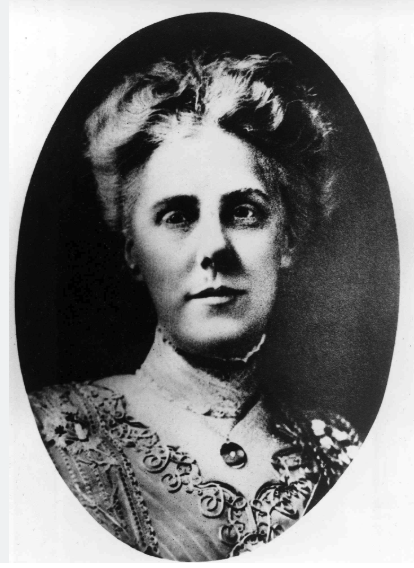
Anna Jarvis people.com
My siblings and I are lucky to have a mother we love deeply, and a relationship with her that feels fun, steady and alive. There is real gratitude in us for that—for the ways we’ve been seen and supported. I don’t take it lightly. I know that kind of bond is not guaranteed.
And I also know many people do not feel this way.
For some, Mother’s Day is a celebration. For others, it presses down on a tender or sore place inside. Absence, distance, grief, rupture—sometimes all of it at once. So while I genuinely enjoy celebrating Mother’s Day in its modern form, I don’t believe in pretending it’s simple. It isn’t. Not everyone has a safe, present or loving mother. I know this day can hurt.
Some people find mothering through friends, grandparents, mentors, chosen family. Some learn to become that source of care for themselves. Some find it in the steadiness of nature—in gardening, ocean air, sunlight on skin, the feeling of being held by something older and larger than human relationships.
I think that counts too.
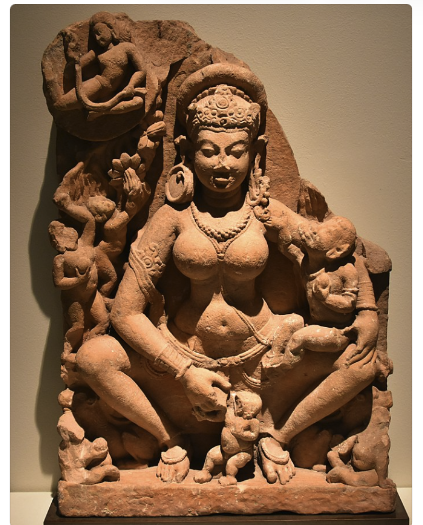
Mother Goddess sculpture from Madhya Pradesh or Rajasthan, India, 6th-7th century, in the National Museum of Korea, Seoul