
When Everything Feels Like Too Much: Ways to Come Back to Yourself When the World Feels Dangerous
Nervous System Regulation
The world around us is incredibly overwhelming lately, with everything that’s happening in the media. Much of that mental and emotional tension lands in our bodies, whether we notice it or not. The constant stream of shocking news, alerts, and endless scrolling teaches our nervous systems to stay on edge.
Our bodies register threats before our minds do—especially when we witness something terrible—which makes calm and clarity feel impossible. We do need to be alert, but the only way to respond effectively is to feel fully empowered: to stay strong, to communicate with clarity and compassion, and to act from a place of power and presence rather than reactivity.
This is why nervous system regulation is important to me—not as the latest trend or buzz phrase, but as a way to reclaim my body from the world’s chaos and cruelty. This post serves as a reminder to myself of the techniques I’ve learned over time. I hope it’s helpful for anyone who needs it. There are many other techniques out there as well.
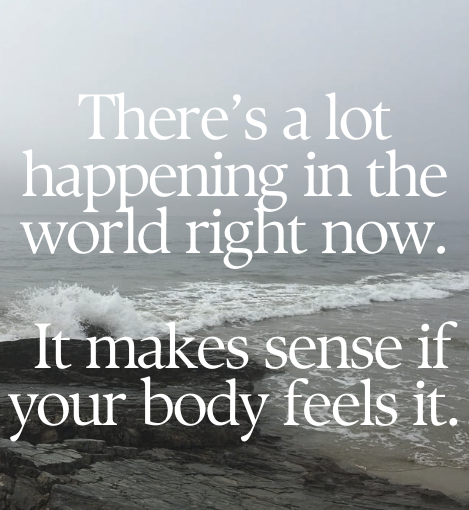
We hear the phrase “nervous system regulation” everywhere—but what does it actually look like in real life?
At its core, nervous system regulation is about helping your body feel safe enough to properly rest, digest, create, connect, and heal. When the system is overwhelmed, even small tasks can feel unbearable. When it’s supported, life becomes spacious, workable, empowering—and even joyful.
There are many ways to support regulation. Some are structured, some are subtle, and most are surprisingly simple.
1. Orient + Reduce Input
Although it seems like evolving out of this would be a great idea for humans, our nervous system can’t fully tell the difference between something happening to us and something happening nearby. Seeing extreme or disturbing events in the news or online can register as a direct threat.
Pause. Take a few slow breaths. Look around your environment and notice colors, textures, light, and shape.
This reminds your body: I am here. I am safe.
At the same time, reduce incoming threat signals. Set clear boundaries with news and social media. Turn off notifications, close tabs, or put your phone in another room. Use a timer if needed.
Staying informed does not require staying flooded.
2. Breathe + Activate Calm
Breath is one of the fastest ways to signal safety.
Use slow, intentional breathing to shift out of fight-or-flight:
Box breathing: inhale 4, hold 4, exhale 4, hold 4
Extended exhales: exhale longer than you inhale
Coherent breathing: slow, even, deliberate
Cold exposure can amplify this effect. Cold water on the face, a cool shower, or holding something cold activates the parasympathetic nervous system—direct, physical signals that it’s safe to slow down.
3. Move + Discharge Stress
Stress hormones need somewhere to go.
Gentle movement helps the body release what it’s holding. Shake out your arms and legs the way animals do after stress. Put on a song and let your body move, sway, or dance however it wants.
Walking, stretching, yoga, Pilates, tai chi—all help.
You can also try:
Progressive muscle relaxation: tense each muscle group starting at your feet, then release
Havening: gently rubbing your arms or face to soothe yourself
Emotion that moves through the body doesn’t get stuck there.
4. Connect + Co-Regulate
Regulation doesn’t always happen alone.
Spending time with someone steady, present, and non-judgmental can calm the nervous system faster than any technique. Relational safety—being seen without needing to be “fixed”—is one of the most powerful regulators we have.
Talking helps. So does cuddling with animal companions.
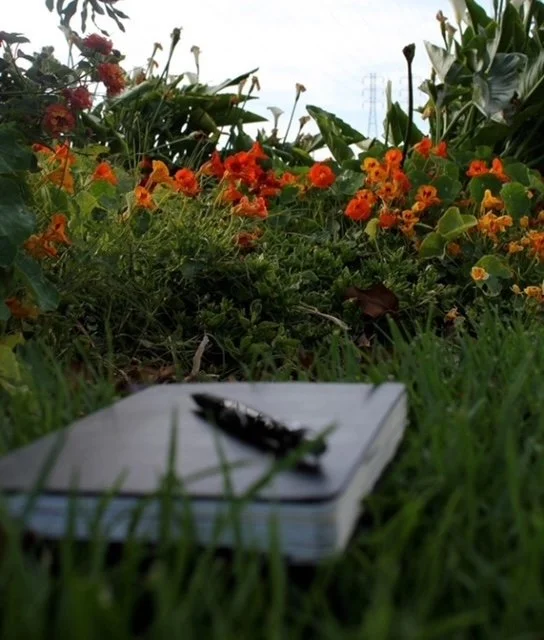
One of my many journals
5. Express + Integrate
Draw, paint, journal, or write without trying to make sense of it. Let expression move energy instead of analyzing it.
Use sound, music, or silence intentionally.
Humming, singing or chanting stimulates the vagus nerve (a nerve in the parasympathetic nervous system that is responsible for “rest and digest” which counteracts “freeze, fight or flight”).
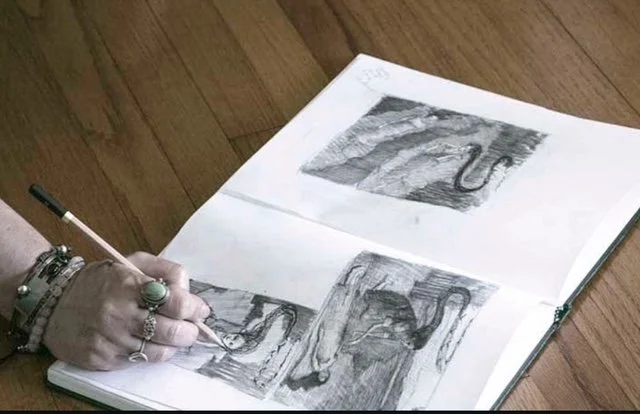
Creativity speaks directly to the nervous system.
6. Create Rhythm + Environment
Predictability is regulating.
Consistent routines—morning light, evening tea, familiar music—teach the body it’s not in constant danger. Your environment plays a role here too.
Surround yourself with objects that feel good: art you love, textures you want to touch, colors that soothe or inspire. Reduce visual noise. Use light, sound, and scent intentionally. Weighted blankets make us feel more relaxed by applying gentle pressure across the body.
Declutter. Fix what needs fixing.
We use red lights at night because they’re non-disruptive to the body’s circadian rhythm.
Let your home reflect who you are becoming.
When your space feels like a haven, your nervous system doesn’t have to keep bracing.
Nature is incredibly important to have a relationship with. Forest bathing can have a positive impact on the oxygen levels in your brain. If a forest is too far away, just getting outside and into nature creates an inner response that reduces stress levels.

Trip to the Redwood Forest
7. Somatic & Therapeutic Support
Some support works best with guidance.
Other techniques are wonderful on your own.
EMDR (Eye Movement Desensitization and Reprocessing)
EMDR helps reprocess distressing memories so they lose their emotional charge. Traumatic experiences are stored in the subconscious and can quietly affect daily life. Many insurance plans cover EMDR—the key is finding a trained therapist you trust.
EFT (Emotional Freedom Technique / Tapping)
Gentle tapping on acupressure points while acknowledging emotion. It may feel silly—and it can be surprisingly effective.
Yoga Nidra
“Yogic sleep.” A guided meditation practiced lying down while maintaining conscious awareness. It combines breathwork, body scanning, and visualization to reduce stress and anxiety.
Deep rest for the nervous system—and one of my favorite techniques.
Sometimes coming back to yourself isn’t about fixing — it’s about remembering where you belong. I explore this more deeply in my reflection on art and belonging→
Sound Baths
Vibration-based regulation using crystal bowls, gongs, and chimes. The body often calms even if the mind resists.
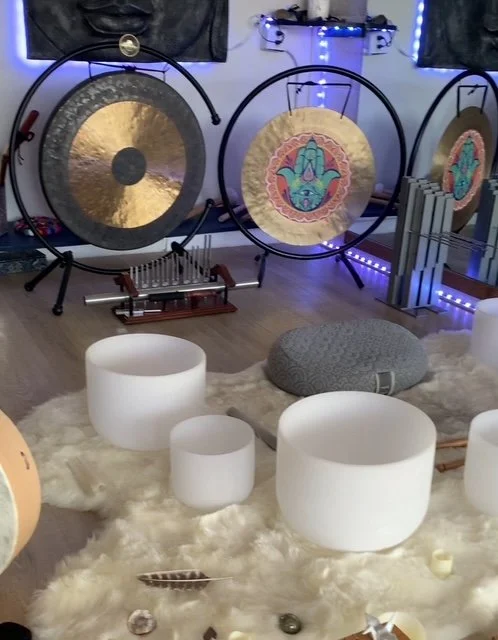
Sound bowls and gongs at Pure Sound Bath in Redondo Beach
Bottom Line
When we witness disturbing events—even from a distance—the body reacts first. Nervous system regulation isn’t about ignoring what’s happening. It’s about creating enough internal safety to respond with clarity instead of reactivity.
This is how we stay grounded and strong—and how we preserve our compassion and humanity in the face of chaos.
You may also enjoy:
What Art Taught Me About Depth and Belonging: How Creative Practice Deepens Connection→
If you’d like to continue exploring these ideas, you can join my email list. ✨When you sign up, you’ll receive a free 5-day guided sequence exploring insight, release, clarity, action, and integration—along with occasional writings and new artwork.

Pacific Ocean-Palos Verdes