
5 Lessons From Persephone: On Descent, Power, and Return
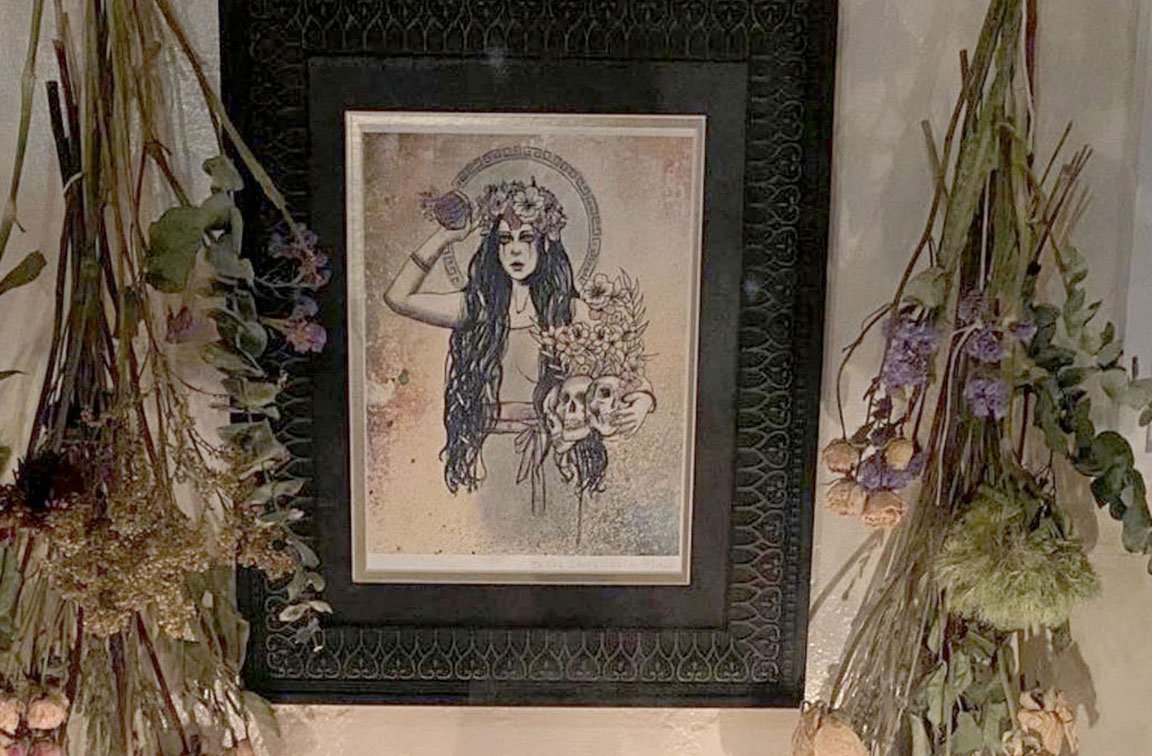
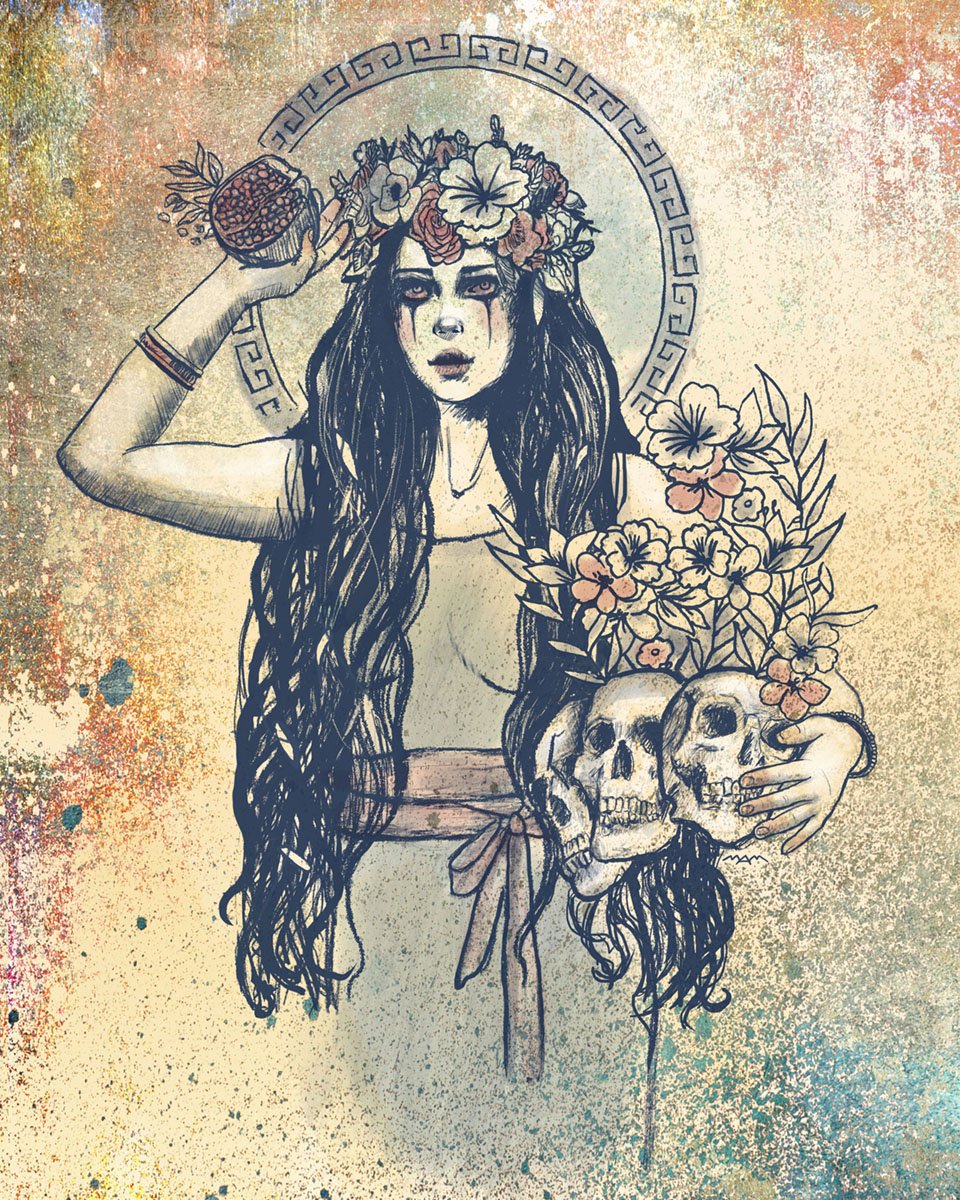
“Persephone” art print by Mary Ancilla Martinez
The story of Persephone comes from Greek mythology. She is the daughter of Zeus (the king of the gods in Greek mythology) and Demeter, (the goddess of the fertile earth and the harvest).
In the most familiar version of the myth, Persephone is gathering flowers in a meadow near a stream when Hades, the god of the underworld, falls in love with her. He is so taken by his love for her that he rises from the earth, abducts her and carries her down into his realm.
Other stories tell a different story—that Persephone and Hades meet and both fall in love, and Persephone makes the choice to follow Hades back to the underworld on her own, where she then becomes Queen of the Underworld. This is a much more empowering version, because she chooses.
Persephone takes a risk, follows her heart and descends into the underworld, becoming someone more powerful than who she previously was. No longer just a maiden of spring, she becomes someone deeper and more complex.
She becomes Queen.
Above the earth, Demeter discovers her daughter has vanished and searches far and wide for her, but is unable to find her. In her grief, Demeter wanders the world searching for Persephone, refusing food, drink, and rest. The goddess who once nourished the land withdraws her gifts from it. Crops fail, and famine spreads across all the lands. Nothing grows while Demeter mourns.
But by this time, the story has already changed, Persephone is no longer only a missing daughter.
She has crossed a threshold.
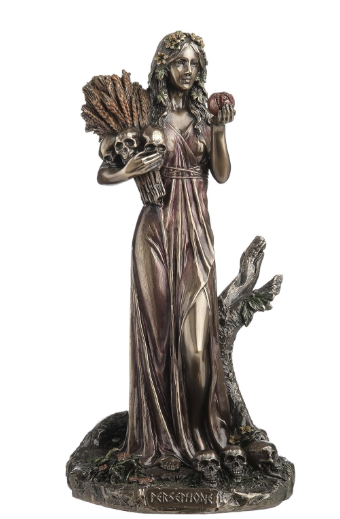
“Persephone” Statue by Veronese Design
To enter the underworld is to move beyond something that simply cannot be undone. It is a place of depth, of shadow, of transformation—and Persephone has not remained untouched by it.
Eventually, Demeter’s devastation draws the attention of Zeus, who realizes that if her grief continues, humanity will not survive. He demands for Persephone’s return. Before relunctantly allowing Demeter to leave, Hades gives Persephone a small but powerful offering: the food of the underworld in the form of pomegranate seeds. In the ancient world, to eat the food of a realm meant to become bound to it. Because Persephone has tasted the seeds, she cannot fully leave the underworld behind.
As a result, Persephone must split her time-she can spend six months out of the year with her mother; the other six months she spends in the realm of Hades as Queen.
Persephone does not leave the underworld unchanged, nor does she abandon what she has become.
Instead, she moves between worlds.
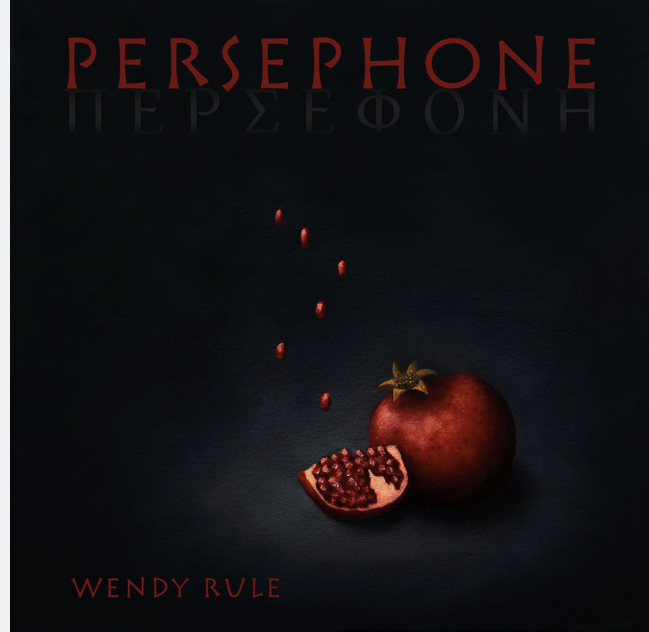
AMAZING album about Persephone by the lovely Wendy Rule-I love it!
For the six months of the year when she returns to the surface, where Demeter waits, the earth responds. The fields soften, flowers bloom and life begins anew.
But Persephone also returns to the underworld, not as an abducted helpless maiden, but as its Queen. During this time on earth, the lands become barren again, crops fail to grow, winter sets in.
To the ancient Greeks, this movement explained the changing of the seasons as well as the deeper truth for humanity that life moves in cycles. Descent and return. Darkness and light. Loss and renewal.
This is the rhythm that makes her story feel so closely tied to the spring equinox: a moment of balance, where light begins to return. Persephone develops in the darkness of winter, and then emerges stronger from it.

Pomegranate Necklace
1. Your Descent Is Not Your End
Persephone’s story begins in light—but it deepens within the darkness.
The underworld is not simply where she is taken, it is where she transforms. It’s where she sheds one identity and grows into a stronger, more empowering one.
There are moments in all of our lives that feel like a descent—times when everything becomes uncertain, dark, even scary at times.
But the myth reminds us:
Descent is not failure.
It is initiation.
2. You Are Allowed to Change
When Persephone returns to the surface world, she is no longer the same.
She has seen another realm and lived another life. She has actually become Queen.
Yet she still walks among the living. There is no expectation that she return unchanged—only that she returns.
We are often taught to remain consistent, to stay recognizable, to remain who we have always been. But Persephone does not do this.
She changes—and she does not apologize for it. In fact, she becomes empowered.
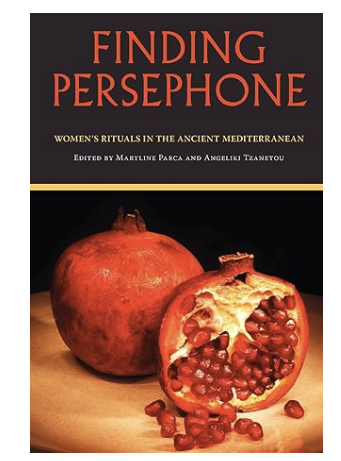
“Finding Persephone” Maryline Parka
3. You Can Belong to More Than One World
Persephone doesn’t choose between the underworld and the earth.
She embodies both.
Part of the year she walks among the living, where the earth blooms in her presence. The other part, she returns below, to the realm of shadow and depth.
She is not divided, she is expanded.
There is a lesson about permission here—that it is possible to hold multiple truths at once, to exist in both light and darkness. You don’t need to reduce yourself to any single version in order to belong or to be understood.
4. Strength Lives in Presence
Persephone doesn’t conquer the underworld, she becomes its Queen. Her power isn’t grounded in force, her power is anchored in presence and embodiment. In her willingness to fully inhabit who she is and what she has become.
This type of influence has the energy to transform your world.
5. You Will Return to Yourself—Again and Again
The myth tells us that Persephone moves between worlds, she continually returns and that each return brings fresh new energy and life with it.
The important takeaway here is that she always returns to herself. She doesn’t come back as the same version, but as someone who carries and moves through cycles. enabling her to grow and expand each time. She doesn’t avoid the darkness, she lives through the threshold, through the moments where light and dark stand in balance before the light begins to grow again.
Persephone is not only the goddess of spring, she is the goddess of transformation, of cycles, of the space between worlds.
Each year, as the earth softens and the first signs of life begin to appear, her story echoes beneath the surface:
You are allowed to change.
You are allowed to descend.
You are allowed to return—on your own terms.
If you’d like to continue exploring these ideas, you can join my email list. ✨When you sign up, you’ll receive a free 5-day guided sequence exploring insight, release, clarity, action, and integration—along with occasional writings and new artwork.
A Deeper Layer: Descent and Belonging
If you are drawn to Persephone’s story and symbolism, I have a Persephone art printavailable that explores these themes of transformation, cycles, and empowerment. Like my other work, it reflects the interplay of light and shadow, the movement between worlds, and the powerful strength that emerges from deep reflection.
If Persephone’s story speaks to anything beyond the changing of the seasons, it is this:
Belonging is not always found on the surface, sometimes it is found in the descent.
If you want to explore this idea more deeply, I wrote more about it HERE→
Note: Some of the links above are Amazon affiliate links. I may earn a small commission if you purchase through them — at no extra cost to you. I only link tools I personally use or recommend, or am interested in, no pressure to click or buy.
“Persephone” by Mary Ancilla Martinez