
Raven Symbolism and Insight: Mystery, Spiritual Meaning and Ancient Wisdom
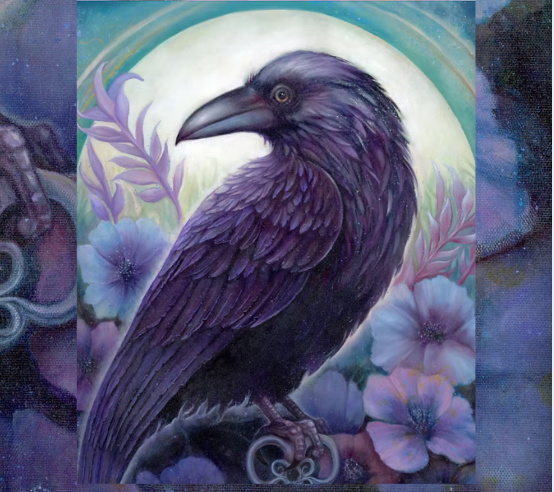
Key Within by Mary Ancilla Martinez
Ravens have fascinated human cultures for centuries. Explore the mythology, symbolism, and deeper meaning of this beautiful and mysterious bird—and discover how raven wisdom can illuminate moments of transformation and hidden insight in your own life.
A Series on Raven Wisdom
For centuries, ravens have fascinated humans. Their intelligence, mysterious presence, and amazingly dark feathers have made them powerful symbols in myth, folklore, and cultural traditions across the planet.
In Norse mythology, the god Odin was accompanied by two ravens, Huginn and Muninn (representing “Thought” and “Memory”). In Indigenous traditions of the Pacific Northwest, the Raven often appears as both a creator and trickster figure. Across cultures, the raven has frequently been seen as a messenger, a guide, and a symbol of hidden insight.
But beyond mythology, ravens are also among the most intelligent animals on Earth. Scientists have documented their remarkable memory, problem-solving abilities, and social intelligence.
This three-part series explores the many layers of raven symbolism—from ancient stories to modern science—and how reflecting on these remarkable birds can be helpful to encourage mindfulness, curiosity, and personal awareness in our own lives.
In this first article, we explore the history and meaning of raven symbolism and how these ideas have developed across cultures and traditions.
What Does Raven Symbolism Mean?
Raven symbolism often represents mystery, intelligence, and transformation, as well as messages from unseen realms. Across cultures and centuries, ravens have appeared in myth, folklore, and spiritual traditions as creatures that move between worlds (Heinrich, 1999; Andrews, 2005).
Because ravens are carrion birds—feeding on animals that have already died—they became associated with the threshold between life and death.
For this reason, many traditions came to see ravens not simply as birds, but as messengers, guardians of hidden knowledge, and guides through transformation — a theme beautifully illustrated in the Crow Tarot Deck by MJ Cullinane, perfect for anyone drawn to corvid magic and insight. Though this is technically a crow deck, not a raven deck, crows carry much of the same transformative symbolism and I enjoy the deck quite a bit (plus I love crows as well).
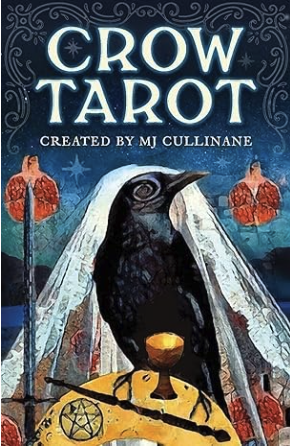
Crow deck by MJ Cullinane.
Ravens as Messengers Between Worlds
Across mythology and folklore, ravens frequently appear at moments of transition.
They circle battlefields, watch from the edges of forests, and appear in places where change or endings occur. Because of this, many traditions viewed ravens as psychopomps—beings capable of guiding souls or carrying messages between worlds (Cirlot, 1971).
Rather than representing death itself, the raven symbolizes the mysterious threshold between endings and beginnings.
This is one reason the raven appears repeatedly in spiritual symbolism and storytelling. It represents the idea that something unseen may be stirring beneath the surface of everyday life. Knowledge, change, or insight could be waiting for recognition.
Why Ravens Became Mythic Creatures
The unusual role of ravens in nature helps explain their powerful symbolism.
Unlike predators that hunt their prey or herbivores that eat plants, ravens often feed on carrion. This ecological role places them in an in-between position: they are neither hunter nor prey, but a participant in the natural cycle that transforms death back into life.
The anthropologist Claude Lévi-Strauss suggested that animals like the raven gained mythic significance because they exist between categories. In symbolic thinking, this makes them natural mediators between opposing realms. Claude Lévi-Strauss held the view that animals occupying these transitional roles often become mythological figures because they help cultures symbolically reconcile opposites such as life and death (Lévi-Strauss, 1963).
Ravens therefore became powerful figures in mythology as:
• messengers
• tricksters
• guides
• guardians of hidden knowledge
They belong to the mysterious space between opposites, where transformation occurs. Because they are able to solve complex problems such as using tools or working with team mates to steal food, they are also seen as trouble makers, cunning, crafty and trickster-like, which is reflected in stories that portray them as thieving or deceitful.
The Intelligence of Ravens
Modern science has revealed something ancient cultures seemed to sense instinctively: ravens are extraordinarily intelligent.
Ravens belong to the corvid family, a group of birds known for remarkable cognitive abilities. Researchers have observed ravens using tools, solving complex puzzles, planning for the future, and recognizing individual human faces (Heinrich, 1999; Marzluff & Angell, 2005).
Their intelligence is so advanced that some scientists compare corvid cognition to that of primates. For further reading, check out this book Bird Brains: The Intelligence of Crows, Ravens, Magpies, and Jays by Candace Savage.
To early observers, a bird that watches silently from above, remembers people, and sometimes mimics sounds could easily seem supernatural. This likely contributed to the belief that ravens carried wisdom from beyond the ordinary world.
Over time, they became symbols not only of mystery but also of insight, memory, and intelligence.
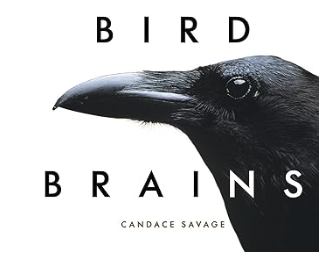
Bird Brains: The Intelligence of Crows, Ravens, Magpies, and Jays by Candace Savage
The Meaning of the Raven’s Black Feathers
The raven’s striking black plumage also plays an important role in its symbolism.
Across cultures, black is associated with mystery, night, and the unknown. It represents the hidden realm where transformation begins (Cirlot, 1971).
Seeds grow beneath dark soil. Stars appear only during the blackness of nightfall.
In the same way, the raven’s black feathers came to symbolize the unseen dimension of life where knowledge and transformation take shape. Rather than simply representing darkness, the raven came to represent the profound mystery from which new understanding and insight emerge — a light revealed only when we look beyond the surface.
Just as the raven reveals what is hidden, I can’t resist a home full of little ravens — this light bearing raven statue is great. It serves serves as a subtle illumination of understanding and reflection.
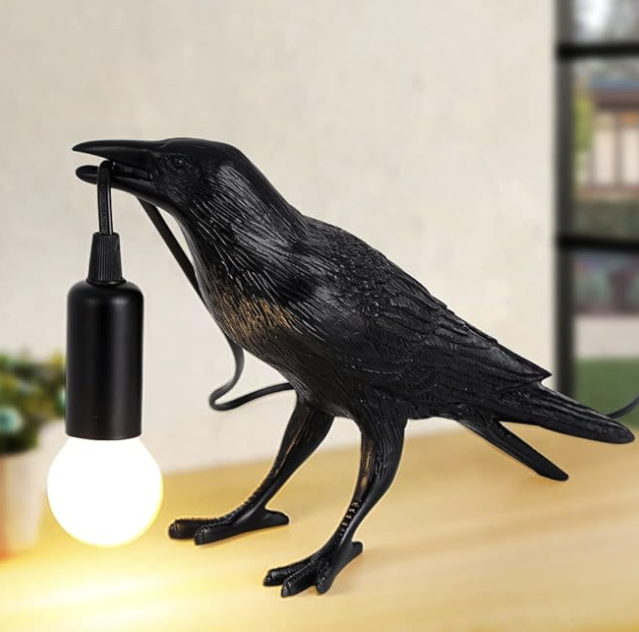
Insightful BIrd
Ravens in Mythology Around the World
Ravens appear in the mythology of many cultures, often playing powerful symbolic roles.
In Norse mythology, the god Odin is accompanied by two ravens—Huginn and Muninn—who travel the world gathering knowledge and conveying what they learn back to him (Lindow, 2001). They are are said to fly across the world each day, observing every corner of Midgard (the realm of humans), bringing back news of events both great and small.
These ravens are more than just messengers; they symbolize the power of observation, reflection, and the mind’s ability to process the world. Huginn represents the roaming thoughts that consider possibilities, while Muninn embodies the memories that anchor understanding.
In several Indigenous traditions of the Pacific Northwest, including the Tlingit, Haida, and Tsimshian peoples, Raven is a creator and transformer figure. He is said to bring light to the world, release the sun, moon, and stars, and shape the land and its inhabitants through his cleverness and trickery (Boas, 1916).
In ancient Greek mythology, ravens were associated with Apollo, the god of prophecy. According to the myths, ravens were once white but were turned black by Apollo as punishment for delivering bad news. This association with prophecy and the conveyance of messages reinforced the raven’s symbolism as a bearer of insight and hidden knowledge (Cirlot, 1971).
Although these stories come from different parts of the world, they share a common theme: the raven is symbolized as a bearer of knowledge from beyond the ordinary human realm.
Common Meanings of Raven Symbolism
Across cultures, raven symbolism is often associated with:
• transformation and change
• intelligence and hidden wisdom
• messages from unseen realms
• protection and guardianship
• mystery and the unknown
• the threshold between life and death
Because of these associations, the raven often appears in art, mythology, and storytelling as a powerful symbol of insight and awareness.
When a Raven Appears
Many people throughout history have interpreted encounters with ravens as meaningful.
Seeing a raven repeatedly has sometimes been understood as a reminder to pay attention to deeper insight or transformation unfolding in one’s life (Andrews, 2005).
Symbolically, a raven encounter may represent:
• a time of change or transition
• hidden knowledge becoming visible
• a message to head
• the emergence of deeper awareness
Whether interpreted spiritually or symbolically, the raven invites us to pause and look beyond the obvious.
How Raven Symbolism Can Work for You
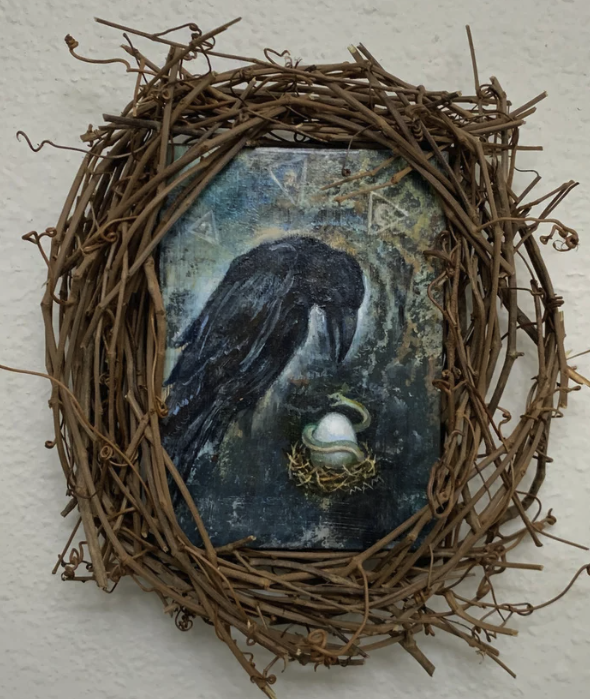
The Eater and the Eaten by Mary Ancilla Martinez
Symbols have power because they speak to deeper layers of human experience.
The raven’s role as a messenger between worlds reminds us that moments of uncertainty or change often contain hidden wisdom. When raven imagery appears in art, dreams, or everyday life, it can be seen as an invitation to listen more closely to your own intuition.
You might reflect on questions such as:
What transformation is unfolding in my life right now?
What truth might I be ignoring?
What insight waits beneath the surface?
In this way, the raven becomes a symbol not of darkness, but of awareness—a reminder that wisdom often appears when we are willing to explore the unknown.
The Raven and the Hidden Key
This symbolism is part of what inspired my painting called Key Within that I created for Kristin Dwan’s oracle deck as the “Skeleton Key” card.
In many traditions the raven is believed to guard hidden knowledge. The key represents the moment when that knowledge becomes accessible—the instant when something once hidden now reveals itself.
Together, the raven and the key symbolize the moment when we begin to unlock truths that were always waiting inside for us to discover.

Key Within By Mary Ancilla Martinez
If you are drawn to this symbolism, I have a few raven art prints available that explore related themes: Key Within, Crow MoonandThe Eater and the Eaten. Each piece reflects aspects of intelligence, transformation, and the unseen guidance the raven offers.
Raven symbolism echoes themes I explored in my recent essays→ What Art Taught Me About Depth and Belonging: How Creative Practice Deepens Connection, When Everything Feels Like Too Much: Ways to Come Back to Yourself When the World Feels Dangerous, and We Create to Return to Ourselves - and 5 Simple Ways to Begin Today. Each of these posts reflects on how pausing, observing, and creating can reconnect us with awareness and insight. Similarly, the raven invites us to notice what is unfolding beneath the surface of our lives and pay attention to hidden wisdom.
If you’d like to continue exploring these ideas, you can join my email list. ✨When you sign up, you’ll receive a free 5-day guided sequence exploring insight, release, clarity, action, and integration—along with occasional writings and new artwork.
Note: Some of the links above are Amazon affiliate links. I may earn a small commission if you purchase through them — at no extra cost to you. I only link tools I personally use or recommend, no pressure to click or buy.
References
Andrews, T. (2005). Animal Speak: The Spiritual & Magical Powers of Creatures Great and Small.
Boas, F. (1916). Tsimshian Mythology.
Cirlot, J. E. (1971). A Dictionary of Symbols.
Heinrich, B. (1999). Mind of the Raven: Investigations and Adventures with Wolf-Birds.
Lévi-Strauss, C. (1963). Structural Anthropology.
Lindow, J. (2001). Norse Mythology: A Guide to Gods, Heroes, Rituals, and Beliefs.
Marzluff, J. M., & Angell, T. (2005). In the Company of Crows and Ravens.